

Zero Suicide Grants Start Here
SafeSide supports organizations to implement Zero Suicide through workforce education, leadership engagement, and ongoing learning. We work alongside health and community systems to strengthen suicide prevention practices in ways that are practical, sustainable, and aligned with funding and reporting requirements. Our approach supports system-wide implementation by aligning how teams identify, respond to, and follow up on suicide risk—so practice is consistent across services and sustained over time.
Check Your Eligibility
Before starting an application, confirm your organization meets the eligibility requirements. This funding is for eligible healthcare and behavioral health organizations only.
SafeSide CARE
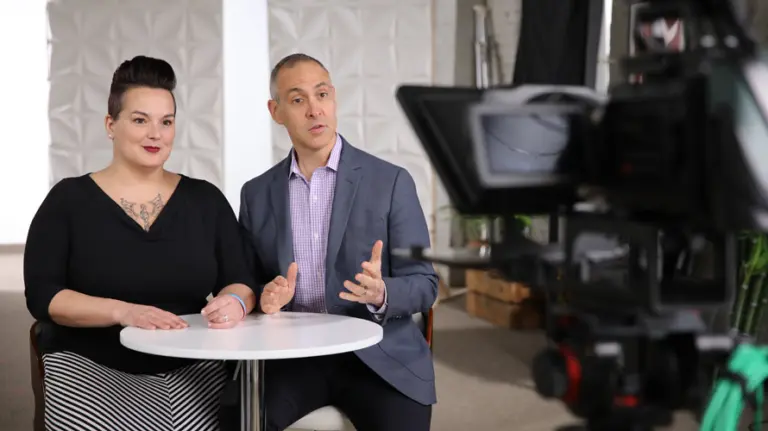
SafeSide collaborated with professionals and organizations across diverse settings to ensure SafeSide CARE addresses the unique challenges and opportunities for Zero Suicide. Through years of clinical care, research, and teaching, Dr. Tony Pisani crafted a framework to guide evidence-based care and a unique workforce education model to support Zero Suicide. Kristina Zurich and our lived experience team ensure that all of our teaching and consultation stays real, relevant, and recovery-oriented.
SafeSide CARE is a suicide prevention workforce education program for mental health, primary health, alcohol and other drugs (AOD), and youth services led by people with lived experience and clinical expertise. Learn more about SafeSide CARE here.
SafeSide Prevention Founder and University of Rochester Professor Tony Pisani provides an overview of Suicide Prevention in Systems (Pisani, Moutier, & Stahl, 2021; Pisani & Boudreaux, 2023), how this relates to Zero Suicide, and the programs SafeSide offers to advance this approach.
Our Faculty
Our faculty are your partners throughout this implementation and training. Office Hours and In Focus sessions provide direct access to SafeSide faculty, with staff trained in SafeSide CARE available to ask questions about challenges in their day-to-day work.

Tony Pisani, PhD
Primary care psychologist, family therapist, and suicide prevention researcher at the University of Rochester Center for the Study and Prevention of Suicide. Tony spent 10 years developing and road-testing the SafeSide framework and educational methods.
Read more about Tony's story.

Kristina Zurich
A gifted teacher dedicated to helping people see the many reasons they have for living. She keeps the team thinking about what patients experience in the health and behavioral health care system.
Read more about Kristina's story.

Anna Defayette, PhD
Mentored by Tony at the University of Rochester, Anna is a suicide prevention researcher and clinical psychologist. Her passion for the SafeSide Framework was sparked while participating in a SafeSide workshop, finding that the key principles are deeply aligned with her own clinical approach. Anna joined SafeSide because she is passionate about making research findings more accessible to others and using data to improve everyday clinical practice.

Sarah Donovan, PsyD
Sarah's journey with SafeSide began when she rolled out SafeSide in a large youth-serving organisation, building on her 15-year career as a psychologist working with youth and families. Relying on clinical experience and a passion for implementation, Sarah and her team develop programs and services that are impactful, innovative, and evidence-based.
Ways We Can Help
Not sure where to start? We can email you a copy-ready document to work from, and when you are ready to talk it through, book a call with our team directly.
Writing a Grant Right Now?
If you’re writing a grant right now, here’s a sample text you can adapt and paste into your application.
Before reaching out for assistance, please confirm your organization meets the following eligibility requirements.
Eligibility is limited to community-based primary care or behavioral health care settings, emergency departments, state mental health agencies (or state health agencies with mental or behavioral health functions), public health agencies, U.S. territories, and Indian Tribes or Tribal organizations. Individuals, private practices, schools, and organizations outside these categories are not eligible.
You must be a healthcare system or organizational entity, not an individual. This grant is designed for organizations implementing the Zero Suicide framework system-wide, requiring dedicated key personnel, including a Project Director (minimum 50% FTE) and a separate Evaluator (minimum 50% FTE).
Budget capacity is required. Annual award amounts are up to $700,000 for states, D.C., and U.S. territories, and up to $400,000 for community-based organizations, emergency departments, and Tribes. Organizations must have the infrastructure to manage a federal cooperative agreement budget of this size.
Prior Zero Suicide grantees are not eligible. Organizations that received funding under NOFO SM-23-011 may not apply. A full list of ineligible organizations is available in Appendix A of the NOFO.
Active SAM.gov and eRA Commons registration is required. Organizations must have an active SAM.gov account (registration can take several weeks) and must be registered in eRA Commons at least six weeks before the deadline. If you are not already registered, the April 20 deadline may not be achievable.
You must be prepared to implement all seven elements of the Zero Suicide framework (Lead, Train, Identify, Engage, Treat, Transition, and Improve) and commit to a five-year cooperative agreement with federal reporting, data collection, and in-person meetings in Washington, D.C.
[Organization Name] will partner with SafeSide Prevention to deliver workforce education aligned with the Zero Suicide framework, supporting [Organization Name] to implement suicide prevention practices across roles and settings. Education will focus on building a shared framework, strengthening workforce confidence and consistency, and supporting ongoing learning rather than one-time training. SafeSide Prevention will work alongside [Organization Name] to support leadership engagement, integration of lived experience, and continuous quality improvement.
SafeSide's approach aligns with the core elements of Zero Suicide, including leadership, training, identification, engagement, treatment, care transitions, and improvement. Workforce education will be delivered flexibly and sustainably through video-based teaching, facilitated discussion, and ongoing opportunities for reflection and learning.
SafeSide CARE is a suicide prevention education program that teaches the SafeSide Framework. The framework organizes evidence-based suicide prevention skills into four core tasks: Connect, Assess, Respond, and Extend. It equips clinical and non-clinical staff with a shared language and a structured, prevention-oriented approach to suicide risk formulation and response. References available here.
SafeSide CARE adds value even for staff already trained in other models, providing a unifying framework, shared language across teams, and practical tools for difficult conversations, including foreseeable changes and contingency planning.
SafeSide CARE is available in four adaptations, each for a specific context:
Mental Health: Inpatient and outpatient clinical services and their clinical and non-clinical staff, psychiatrists, psychologists, counselors, social workers, and non-clinical colleagues, including peer workers.
Primary Health: General health care practices and their staff, including doctors, nurses, specialists, and their administrative support team.
Youth Services: Services working with children, youth, and young adults up to age 25, clinical and non-clinical roles.
Alcohol and Other Drugs: Substance use treatment services, including counselors, allied health, social workers, and peer workers.
SafeSide CARE does not replace existing evidence-based practices; it provides a unifying framework within which existing tools and protocols can be integrated, including C-SSRS, ASQ, SAFE-T, and Brief Safety Planning Intervention.
SafeSide CARE is delivered through InPlace® Learning, a scalable and sustainable workforce education model that does not rely on a train-the-trainer approach. No internal trainer is required. Organizations can be ready to launch in as little as 3–5 days, with staff completing the program in approximately 4–5 hours.
Implementation consists of three phases.
In the initial phase, organizations complete a one-time configuration and setup process supported by the SafeSide team.
In the delivery phase, staff complete video-guided workshops in small groups, led by on-screen clinical and lived experience experts, with discussion prompts to support application in practice.
In the sustained learning phase, ongoing engagement is maintained through monthly questions and updates sessions with SafeSide faculty, weekly microlearnings, access to refreshers and downloadable practice tools, and a global community of practice. This model ensures that training is not a one-time event but a sustained workforce development program that supports new staff onboarding and continuous skill development throughout the grant period.
The delivery model, InPlace® Learning, builds on the Commitment to Living (CTL) program, the first brief training to demonstrate objectively rated improvement in assessment documentation (Pisani et al., 2012).
CTL was adapted online, tested, and enhanced with a lived experience co-trainer, video demonstrations, and a video-guided group learning approach previously validated with substance use counselors. The resulting InPlace® Learning demonstrated strong educational efficacy and perceived relevance among mental health professionals and youth services workers (Donovan et al., 2023). Learn more here.
covering Goals and Measurable Objectives mapped to Zero Suicide core pillars, Data Collection and Performance Measurement, Budget and Contractual Costs, and Lived Experience Integration.
Fill out the form below!
Yes — both Core Connections and SafeSide Restore are eligible programs for grant funding. While we have ready-made grant language available for SafeSide CARE, we work with organizations individually to develop grant applications for our other programs. Get in touch with our team below, and we can help you scope the right approach for your funding application.
Take the Next Step
SafeSide works alongside organizations at every stage of the grant process — from helping you scope the right program for your setting, to providing grant-ready language, to supporting implementation once funding is confirmed. Whether you are at the early stages of planning or ready to submit, our team can move quickly to support you.
Email Me Grant Language
Complete the form below to receive grant language.