

One System. Every Setting. Everyone Covered.
Most suicide prevention efforts focus on the individual clinician. SafeSide takes a different approach — building the culture, practices, and workforce development that allow your whole agency to respond consistently, at every level, across every setting.
Rachael Holloman, the Senior Director of the Georgia DBHDD Office of Federal Grants and Suicide Prevention, reflects on the unique pressures facing today's students, and why the educators who show up for them every day deserve the same tools and support as any other frontline workforce
Core Connections Testimonials
Four Programs. One System.
Most suicide prevention focuses on the individual clinician. SafeSide takes a systems approach — so your whole agency responds consistently, at every level, across every setting. Start with one program, and expand from there.
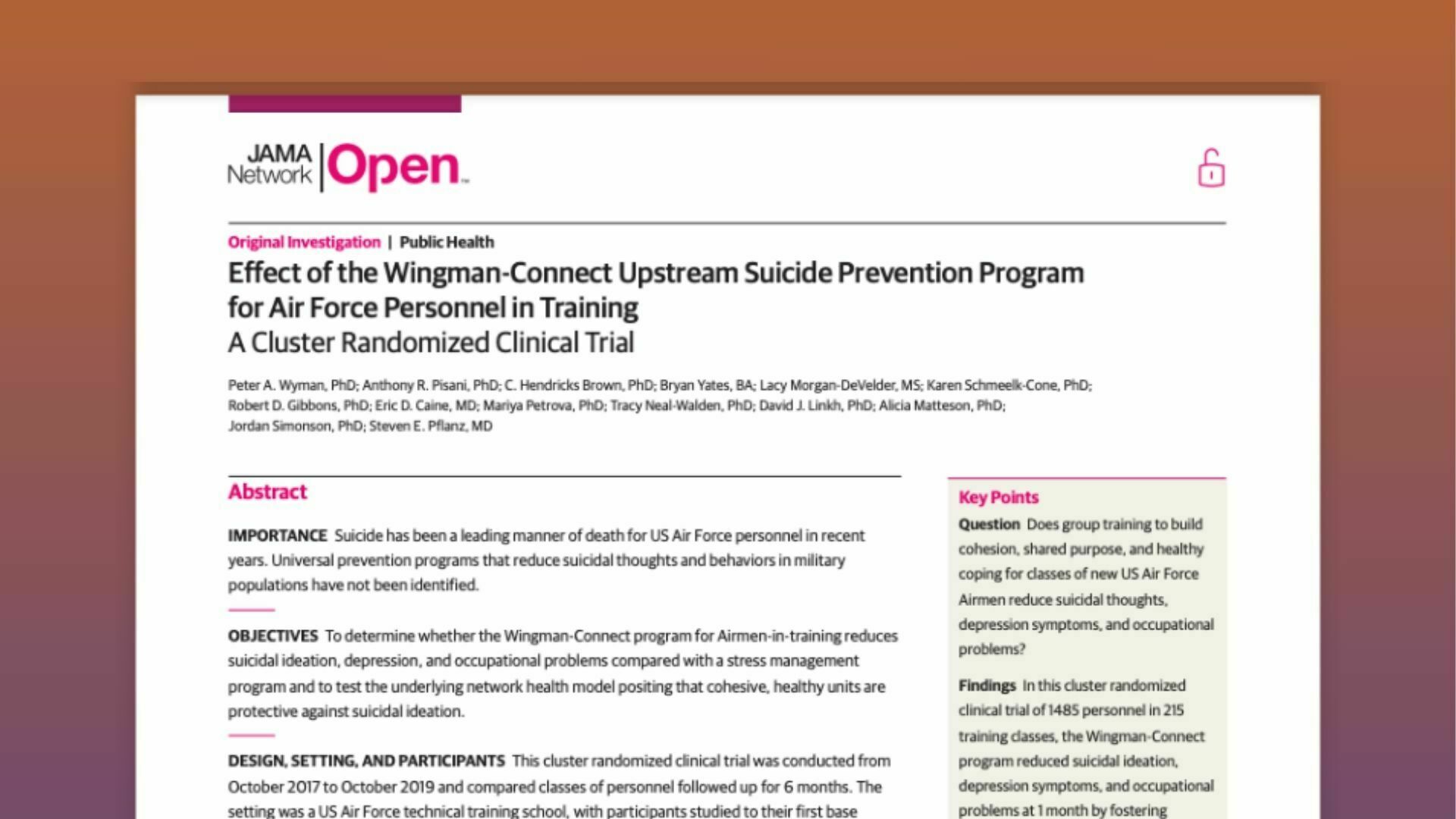
Core Connections
Start here to strengthen the foundation. Core Connections builds team cohesion, reduces isolation, and supports staff well-being — creating the trust and resilience that makes every other program more effective. For everyone in your agency, regardless of role.
SafeSide CARE
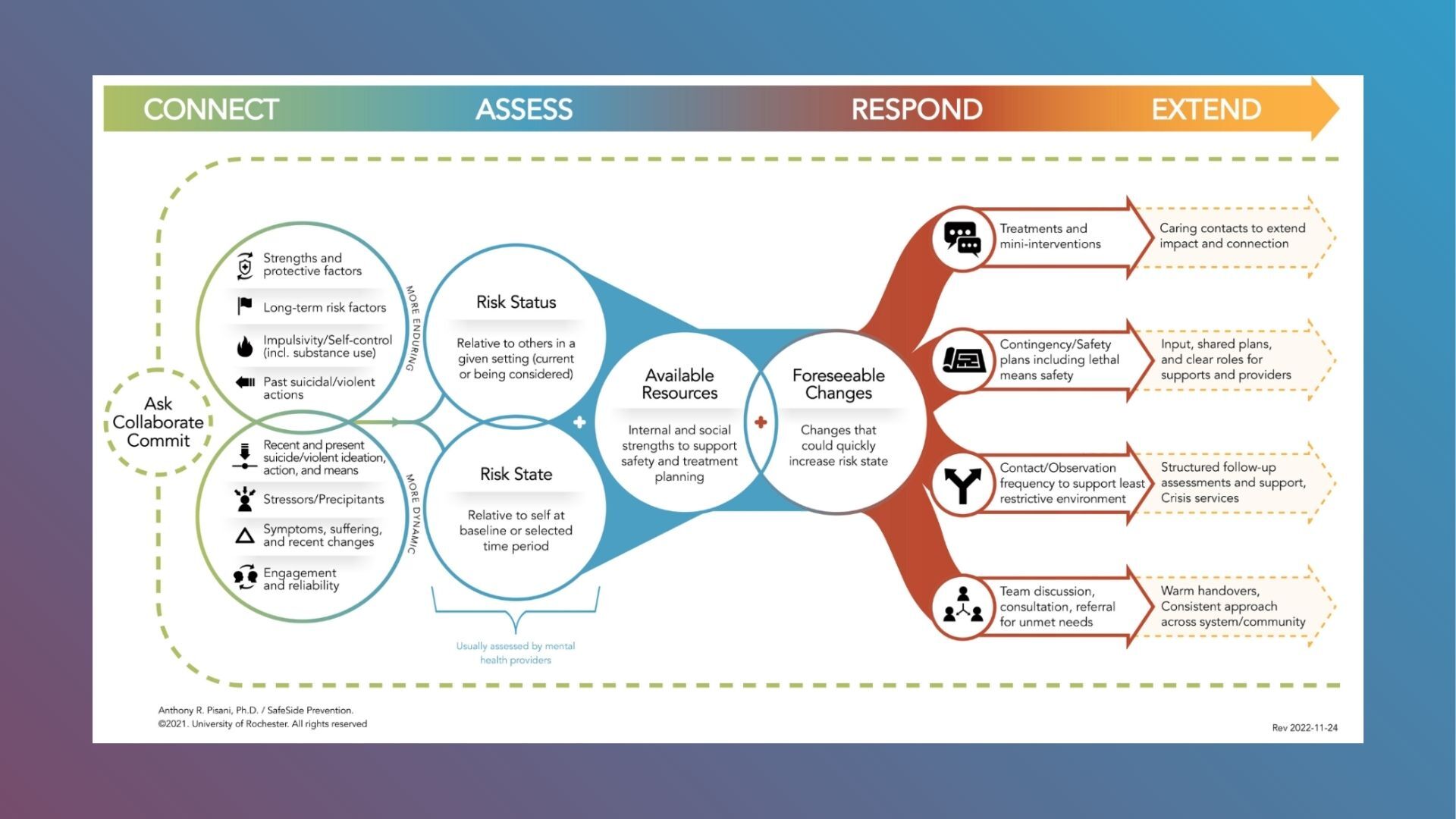
SafeSide CARE gives anyone who may encounter a person at risk — clinicians, receptionists, case managers, support staff — a shared framework for recognising and responding to suicide risk. It builds consistency and confidence across every role that touches the people you serve.
CAMS Treatment
For clinicians only. CAMS is a structured, evidence-based treatment for suicidal ideation that engages patients as active partners in their own care
SafeSide Restore
For clinical and quality teams. SafeSide Restore provides leaders with a network for collaborating with other external organisations to build a more restorative, just, and learning culture.
Safety and Resilience Starts Here. Results prove it.
Learn More About Each Program
SafeSide CARE Testimonials
Frequently Asked Questions
Services engage with SafeSide in different ways depending on their goals, workforce needs, and service setting. Some organizations begin with a single workshop or program, while others build longer-term partnerships focused on practice consistency, workforce support, implementation, or culture change across teams and systems.
Once you connect with us, you’ll be guided through a simple step-by-step process — starting with a call to understand your goals, followed by planning and building the right pathway for your context. You can read more about the full process on our What to Expect page.
SafeSide Conversations is delivered as a 60-minute eCourse for all school faculty and staff, followed by six short Skills Practice simulations completed throughout the year to reinforce learning. SafeSide CARE: School Mental Health is delivered as a 4-hour workshop for mental health staff and supervisors. Core Connections is delivered in interactive group sessions — full or half-day — for teams.
Core Connections: 4–6 hours of interactive team sessions
SafeSide CARE: Half-day InPlace® Workshops with ongoing learning
CAMS: Structured training plus fidelity support
Restore: Bi-monthly network meetings
Yes. Many services begin with CARE and CAMS in priority teams, then add Core Connections for well-being and Restore to strengthen culture after incidents.
Stronger Systems. Clearer Response.
SafeSide Prevention delivers a systems-based approach to suicide prevention customised to your requirements.